
Methodology
Innovation Management.
There is a handful of models we have been using for years to assess new trends and technologies. Only one thing matters to us in doing so: they have to deliver something in practice — not theory for theory's sake.
Bedrija Hamza presents three innovation models in Swiss German — using the example of the credit card industry.
Three models we use every day.
Trigger of Innovation
What gives rise to an innovation? A technological, process or business-model invention — or a new customer need.
Application: Recognising whether there is genuine demand behind a trend, or just a solution in search of a problem.
Technology Adoption Life Cycle
How different user groups — from innovators to laggards — adopt a technology over time.
Application: Determining the right moment to invest or enter the market, instead of arriving too early or too late.
Gartner Hype Cycle
The typical life cycle of a technology: from the Peak of Inflated Expectations through the Trough of Disillusionment to the Plateau of Productivity.
Application: Separating hype from substance — and making sound decisions instead of blindly following every trend.
Our own model
The 3 Stages of Digital End User Adoption.
Out of exactly this practice we developed — together with Christoph Zogg — a model of our own. It answers the question that decides whether a technology succeeds or fails: When does it actually get used on a regular basis?
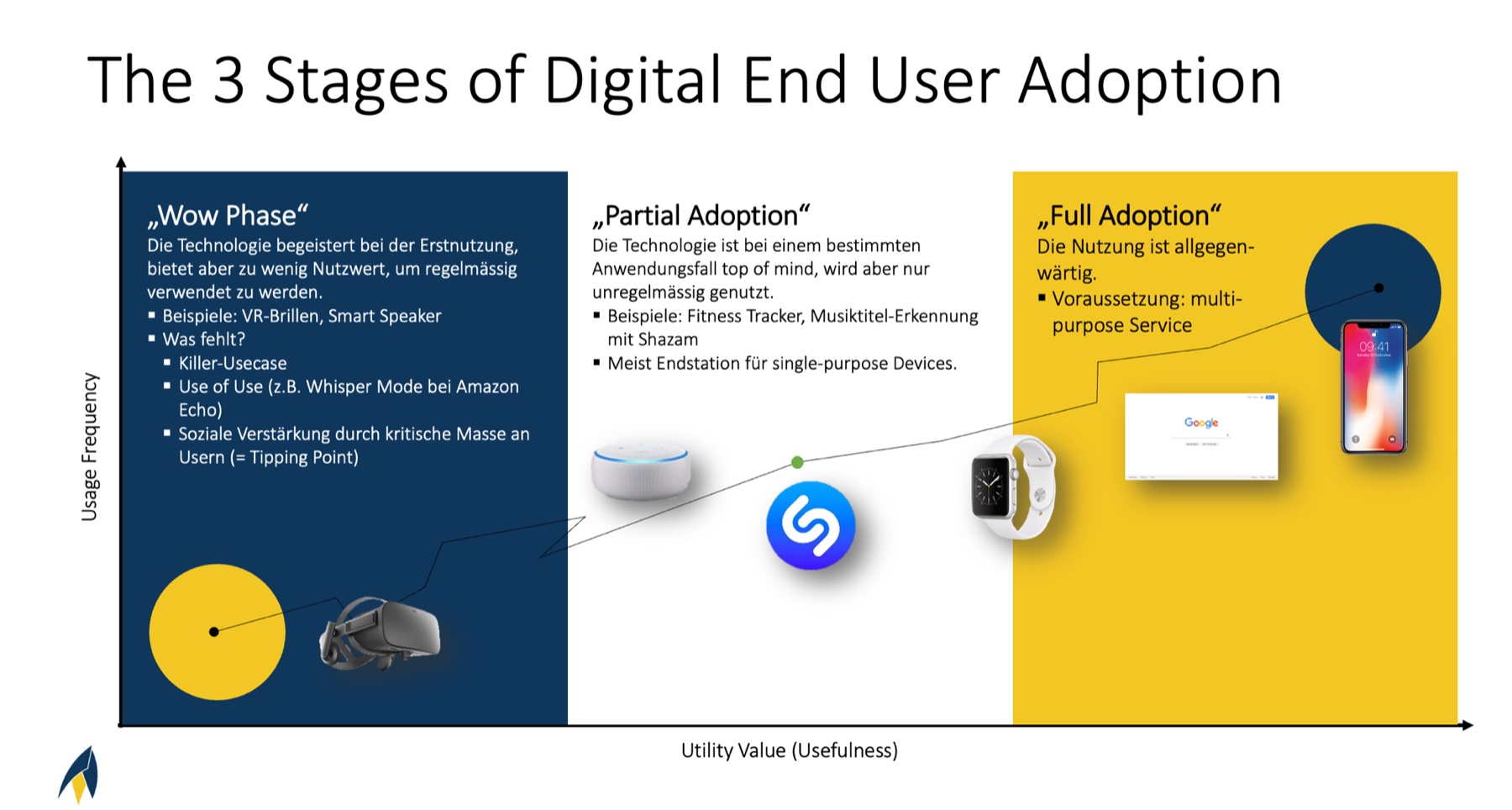
Wow Phase
The technology impresses on first use, but offers too little value to be used regularly. The killer use case is missing.
Partial Adoption
Top of mind for a specific use case, but used only occasionally — usually the end of the line for single-purpose devices.
Full Adoption
Usage is ubiquitous. This almost always requires a multi-purpose service.
Our stance
Models are tools, not truths.
These models help to assess technologies objectively and not chase every hype. What matters, though, is not knowing them — but what you build with them. That is exactly where our work begins.
What comes of it →